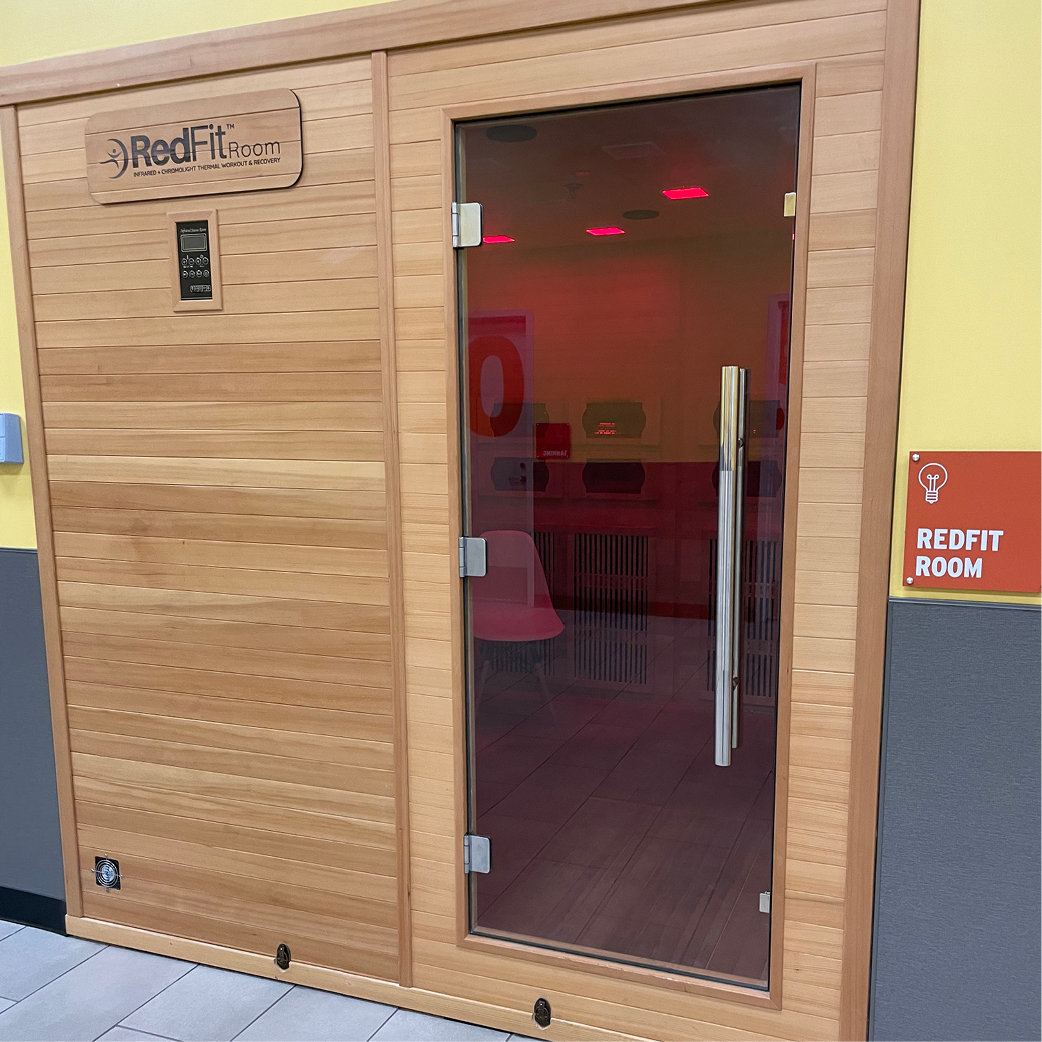
Gyms with Red Light Therapy: The Complete 2026 Guide

Red light therapy is one of the fastest-growing amenities in the gym industry. Five years ago, you'd only find it in med spas and biohacking clinics. Today, we track 2,272 gym locations with red light therapy across 12 chains—and that number is climbing fast.
The growth is being driven by a few factors: the wellness recovery trend, the relatively low cost of installing therapy beds and panels, and a consumer base that increasingly expects more from their gym than just dumbbells and treadmills.
That said, this is still a newer amenity. You won't find it at every gym, and the type of red light therapy equipment varies significantly from chain to chain.
Planet Fitness is by far the largest player here. Their Black Card membership ($24.99/month at most locations) includes access to "Total Body Enhancement" booths—standing red light therapy pods that combine red light with vibration platforms. These are available at most of their 2,500+ locations, making PF the single biggest source of gym-based red light therapy in the country. The experience is basic (a timed session in a booth), but the accessibility is unmatched.
Crunch Fitness has been rolling out red light therapy beds at select locations, particularly their Signature clubs. Some Crunch locations brand this as part of a "Relax & Recover" zone or wellness suite. Availability varies by franchise owner.
Retro Fitness has invested heavily in what they call the "Zen Den"—a dedicated recovery space that includes red light therapy beds alongside HydroMassage and other recovery tools. This is a core part of their brand refresh and is rolling out across new and renovated locations.
VASA Fitness offers red light therapy at select locations as part of their recovery amenities. Chuze Fitness has also added it at some clubs. Gold's Gym, Anytime Fitness, Snap Fitness, UFC GYM, Onelife, Fitness 19, and Vim + Vigor Fitness round out the list, though availability is location-dependent at all of these.
Budget and boutique chains without red light therapy include LA Fitness, 24 Hour Fitness, EoS Fitness, Equinox (surprisingly), and Blink Fitness. Equinox may add it eventually given their wellness positioning, but as of now, it's not standard.
Red light therapy (also called photobiomodulation or low-level light therapy) uses wavelengths of red and near-infrared light—typically 630–850nm—to penetrate the skin and stimulate cellular activity. It's been studied extensively in clinical settings, though its application in commercial gyms is still catching up to the research.
Here's what the current evidence supports:
Muscle recovery. This is the strongest use case for gym-goers. A 2024 meta-analysis of 34 randomized controlled trials found that pre-exercise red light therapy produced moderate improvements in endurance and strength recovery, plus a significant reduction in creatine kinase (a marker of muscle damage). The American Council on Exercise notes that photobiomodulation shows promise as a post-exercise recovery tool, with some studies suggesting it outperforms cryotherapy for muscle recovery.
Inflammation reduction. Red light therapy appears to dampen pro-inflammatory cytokines while promoting anti-inflammatory pathways. For gym-goers dealing with persistent joint soreness or delayed onset muscle soreness (DOMS), this is relevant.
Skin health. Dermatological research has consistently shown benefits for collagen production, skin texture, and reducing fine lines. Stanford Medicine notes that while the dermatology applications are more established, the broader therapeutic potential is still being investigated.
Circulation. Red light stimulates nitric oxide release in blood vessel walls, promoting vasodilation and improved blood flow. This supports nutrient delivery to muscles and faster clearance of metabolic waste after training.
Important caveats. University Hospitals points out that commercial devices (like those in gyms) are generally less powerful than clinical-grade equipment used in research settings. Results build over time with consistent use—a single session won't produce dramatic changes. Most protocols recommend 10–20 minute sessions, 3–5 times per week.

Based on our database of nearly 10,000 gym locations, here are the chains where you'll find red light therapy:
Planet Fitness — The dominant player. Their "Total Body Enhancement" booths (Beauty Angel RVT 30) are available at most Black Card locations. These standing pods combine red light wavelengths with a vibration platform. Sessions are typically 12 minutes. Included with the Black Card membership ($24.99/month at most locations).
Crunch Fitness — Red light therapy beds are available at select locations, primarily Signature clubs. Often bundled into a wellness or recovery suite alongside HydroMassage. Availability is franchise-dependent.
Retro Fitness — Their "Zen Den" concept includes red light therapy beds as a core recovery amenity. This is being rolled out across their newer and renovated locations as part of a brand-wide wellness push.
VASA Fitness — Available at select locations. VASA continues to expand their recovery amenity suite, and red light therapy is part of that growth.
Gold's Gym — Some franchise locations have added red light therapy beds. Availability varies significantly by owner.
Chuze Fitness — Select locations offer red light therapy as part of their amenity package.
Anytime Fitness — A small but growing number of Anytime Fitness franchise locations have installed red light therapy equipment. Given the franchise model, availability varies widely.
Snap Fitness — Similar to Anytime—some franchise owners have added it, but it's not chain-wide.
UFC GYM — Select locations include red light therapy as part of their recovery offerings.
We also track red light therapy at Onelife, Fitness 19, and Vim + Vigor Fitness.
Several major chains don't currently offer red light therapy:
LA Fitness / Esporta Fitness — Despite being one of the largest mid-range chains, LA Fitness has not added red light therapy to their amenity lineup.
24 Hour Fitness — No red light therapy at any locations.
EoS Fitness — EoS loads their clubs with recovery amenities (saunas, steam rooms, pools), but red light therapy hasn't made the cut yet.
Equinox — Surprising given their premium positioning and wellness focus, but Equinox hasn't standardized red light therapy across their clubs.
Blink Fitness — Budget-focused with no recovery-oriented amenities.
YouFit Gyms — No red light therapy offerings.
If red light therapy is a priority, Planet Fitness Black Card is the easiest and most affordable entry point. For a more premium experience, look at Retro Fitness's Zen Den concept or Crunch Signature locations.
Enter your ZIP code in our search tool above and we'll show you every gym within 10 miles that has red light therapy.
A few things to keep in mind:
Understand the equipment type. Gym red light therapy comes in several forms: standing booths (like Planet Fitness's Total Body Enhancement), lay-down beds (similar to tanning beds but with red/NIR LEDs), and wall-mounted panel systems. The experience and wavelength coverage differ between these. If you have a preference, ask the gym which type they use.
Check the membership tier. At Planet Fitness, red light therapy requires the Black Card ($24.99/month). At other chains, it may be included in premium tiers or available as a per-session add-on.
Be consistent. The research is clear that red light therapy benefits accumulate over time. A single session won't change your life. Plan for 3–5 sessions per week, 10–20 minutes each, for several weeks before evaluating results.
Manage expectations. Commercial gym equipment is generally less powerful than clinical devices. You'll likely see benefits in recovery and skin quality over time, but don't expect the same intensity as a dedicated red light therapy clinic.
How many gyms have red light therapy?
We currently track 2,272 gym locations with red light therapy across 12 chains in the United States.
Is red light therapy at the gym safe?
Yes. Red light therapy uses non-ionizing wavelengths that don't damage skin or tissue. It's considered low-risk by dermatologists and sports medicine professionals. The main precaution is eye protection—most gym RLT devices provide goggles.
How long should a red light therapy session last?
Most gym sessions run 10–20 minutes. Planet Fitness's Total Body Enhancement booths are set to 12-minute sessions. Consistency matters more than session length—aim for 3–5 sessions per week.
Is red light therapy the same as tanning?
No. Tanning beds emit ultraviolet (UV) radiation that darkens skin and carries cancer risk. Red light therapy uses visible red and near-infrared wavelengths (630–850nm) that don't tan or burn skin. They're completely different technologies.
What's the difference between red light therapy and infrared saunas?
Infrared saunas use infrared light primarily to generate heat, raising your core body temperature. Red light therapy uses specific wavelengths to stimulate cellular activity (mitochondrial function) without significantly heating the body. Both have recovery benefits, but through different mechanisms.
Will I see results from gym red light therapy?
Results depend on consistency, the quality of the equipment, and your goals. Most users report improvements in muscle soreness, skin quality, and general recovery after several weeks of regular use. Don't expect overnight transformation.
Gym amenity data sourced from gymstracker.com's proprietary database of nearly 10,000 gym locations across 40+ chains. Health information referenced from PubMed, the American Council on Exercise, Stanford Medicine, and University Hospitals. Amenity data is verified through official gym websites, direct outreach, and member reports. Last updated April 2026.